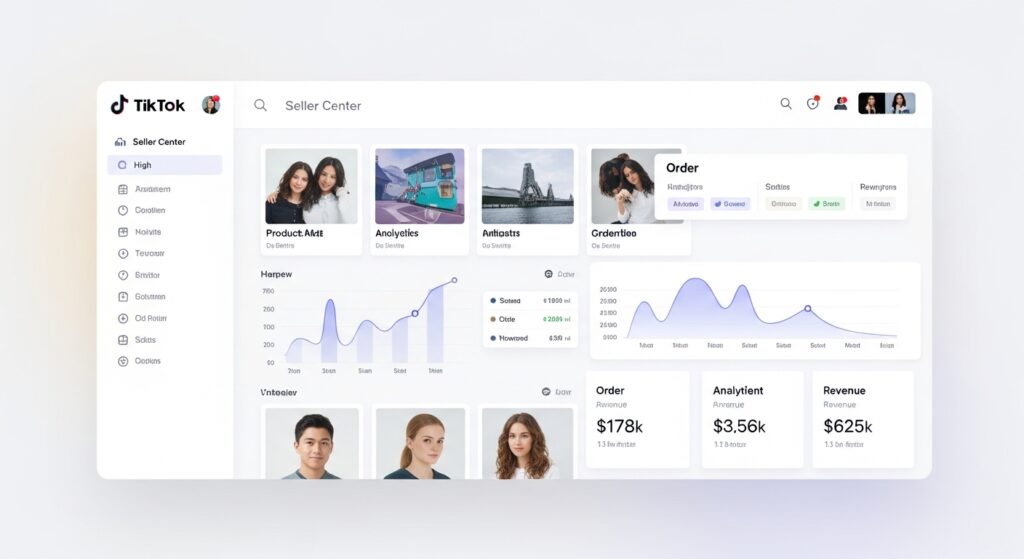
This works best for sellers who have an active Seller Center account with at least one live SKU. It won’t help if your shop is still pending approval or your region doesn’t have Shop Tab access yet.
What “Succeeding on the Shop Tab” Actually Means
Succeeding on the Shop Tab refers to earning consistent organic placement inside TikTok’s dedicated marketplace discovery feed the tab where users browse and buy without leaving the app. It is driven by a multi-signal recommendation algorithm, not by follower count or ad spend alone.
The Shop Tab isn’t the For You Page. That distinction matters more than most sellers realize.
The Shop Tab is the marketplace area of the TikTok app where users can browse shops and purchase products in one place. It has its own recommendation engine separate from the main content feed and it scores products using a different set of inputs than the viral video algorithm most creators are familiar with.
Here’s the thing: TikTok Shop operates on a dedicated product recommendation system explicitly designed for discovery and conversion, and unlike the main feed, this system relies on three primary data inputs to personalize what users see. Understanding those three inputs is where most sellers stop being guessers and start being strategists.
According to TikTok’s own Commerce report, products appearing in the top 10 of their category capture over 70% of organic browse traffic. If you’re outside that window, you’re not just ranking lower, you’re functionally invisible.
And the market is not slowing down. U.S. GMV grew 68% year-over-year to $15.1 billion in 2025, up from $9 billion in 2024, with continued double-digit growth expected through 2029. There are more buyers than ever. The problem for most small sellers isn’t demand for its discoverability.
How the Shop Tab Algorithm Actually Scores Your Products
Most guides skip this. They’ll tell you to optimize your title without explaining why the title matters to the system that decides whether your product appears in someone’s Tab.
The Shop Tab’s content information signals include product details such as the number of views and reviews a product or shop receives, the level of detail in product descriptions and photos, and the frequency of products that are purchased or added to a cart as well as seller information like shipping speed, return rate, number of complaints, and certifications.
Or maybe I should say it this way: the algorithm is essentially scoring your entire operation, not just your listing. Your shipping SLA, your return rate, your review velocity all of it feeds the model.
User interactions that influence your Shop Tab placement include products and shops users have browsed, saved, added to cart, and purchased, as well as TikTok Shop content they like, share, comment on, watch in full, or skip. This means the algorithm is simultaneously scoring the buyer’s behavior and your product’s behavior. It matches one to the other. For most customers, user interactions which may include the time spent watching a video and whether they’ve purchased a product — are generally weighted more heavily than other signals.
Three signals dominate. Know these cold:
1. Purchase and cart velocity: How frequently your product gets bought or added to cart relative to how often it’s shown. Low conversion signals that the product isn’t satisfying intent.
2. Review volume and recency: Review velocity matters more than total count. Consistent new reviews signal active sales to the algorithm.
3. Content linkage: Whether your products are tagged in videos that earn strong engagement. More on this in the next section.
Quick note: I’ve seen conflicting data on exactly how much weight the algorithm gives to video engagement vs. direct purchase signals in the Shop Tab specifically. Some practitioners argue video engagement dominates early; others say purchase velocity overtakes it once a product has sufficient history. My read is that they work in sequence, engagement gets you initial exposure, purchase velocity keeps you there.
The Listing Optimization Every Seller Underestimates
How do TikTok Shop sellers get their products to show up in the Shop Tab? Getting products to appear in TikTok Shop Tab recommendations requires optimizing three layers simultaneously: listing completeness (title, description, images, attributes), content linkage (tagged videos with strong engagement), and shop health signals (shipping speed, low return rate, review velocity). According to Canopy Management, sellers who master TikTok Shop SEO see 340% higher visibility and 156% better conversion rates than those relying purely on viral content.
Most sellers copy their Shopify or Amazon listing into Seller Center and call it done.
That approach actively hurts you. TikTok keywords are more conversational and problem-focused than Amazon TikTok users search for earbuds that don’t fall out during workouts, not wireless bluetooth earbuds. Optimize for natural language and specific use cases rather than technical product specifications.
To optimize a TikTok Shop listing for Shop Tab placement, follow these steps:
- Write a title using a conversational search phrase (under 34 characters of high-intent terms first).
- Fill every attribute field in Seller Center incomplete attributes suppress distribution.
- Upload a minimum of 5 product images; use all available image slots where possible.
- Use TikTok’s Product Optimizer tool to audit your main image for AI-recommended improvements.
- Write a description that answers what problem does this solve in the first two sentences.
- Tag at least one organic or affiliate video to your listing within the first 48 hours of publishing.
Use all available image slots a minimum of 5, ideally 7–9 images. This isn’t cosmetic advice. Image completeness is a content information signal the algorithm reads directly.
What most guides skip is the audio layer.Sound search optimization turns your audio into a search asset the words used in video content directly influence the ranking of the product. If a creator video linked to your product says the best moisturizer for oily skin in the first five seconds, that spoken phrase feeds TikTok’s transcription index. You effectively get searched for that term.
👉 TikTok Seller Center setup guide
Content Linkage: Why Your Videos Are a Ranking Signal, Not Just Marketing
This is the section that separates sellers who get Tab placement from those who don’t.
Native TikTok Shop product tags make your videos eligible for the TikTok Shop tab feed an additional distribution channel. A video with a native tag isn’t just marketing content. It’s a ranking input for the product itself. The engagement that video earns saves, watch-through rate, and shares gets credited back to the product listing as a quality signal. TikTok’s algorithm evaluates engagement signals like watch time, shares, and completion rate not the presence of a product tag. However, poorly placed shoppable links can suppress these engagement metrics indirectly by causing viewers to bounce early.
So the tag placement matters. The key is delaying product tag visibility until at least 40% into the video and leading with entertainment-first content.
Look, if you’re posting videos where you open with a shop now and pin the product tag in the first two seconds, here’s what actually works: treat the first 40% as a hook-and-story, then surface the tag. The algorithm reads the engagement you earned before the tag appeared and credits it to the product.
The platform average add-to-cart rate hovers around 1.2%, but well-optimized creator videos with strategic product link placement consistently achieve 4–6%. That’s a 3–5x gap that has almost nothing to do with the product quality.
Organic creator videos vs. affiliate creator videos for Shop Tab ranking: Organic videos (posted by the seller’s own account) signal brand consistency and accumulate shop health data faster. Affiliate creator videos (through TikTok Creator Marketplace) reach new audiences and provide the algorithm with diverse engagement pools that accelerate ranking. The key difference: use organic content to establish baseline engagement signals; use affiliate creators to generate the volume velocity that pushes products into broader Tab categories.
👉 TikTok’s official Shop recommendation documentation
Campaign Participation: The Lever Nobody Talks About
Participating in every platform promotional event. Super Brand Day, seasonal sales, flash deals are rewarded algorithmically by TikTok.
This is not optional. It’s a ranking input.
When TikTok runs a campaign, the algorithm prioritizes products enrolled in that campaign for Shop Tab placements during the event window. The sellers who compound their Tab visibility fastest are the ones who treat campaign enrollment as a non-negotiable, not an afterthought.
Why does my TikTok Shop product have zero impressions on the Shop Tab? Zero Shop Tab impressions typically indicate one of four suppression causes: incomplete product attributes in Seller Center, no linked content sending engagement signals to the listing, a shop health issue such as a high return rate or unresolved complaints, or ineligibility due to missing category certifications.Seller information like shipping speed, return rate, number of complaints, and certifications directly influence Shop Tab recommendation eligibility. Check your Shop Score in Seller Center first it surfaces most of these issues in one dashboard view.
A tactic that’s underused: the entry-price SKU strategy. A beauty brand that introduced a $14.99 trial-size SKU alongside a $39.99 full-size product saw the trial size generate 4x the unit volume, dramatically boost velocity signals, and pull the full-size product up in category ranking through association with total GMV increasing 180% in 60 days.
Some experts argue that you should focus all energy on your hero SKU to concentrate velocity signals. That’s valid if your hero product already has traction. But if you’re dealing with zero impressions on a new listing, a lower-ticket entry SKU can seed the velocity the algorithm needs to start surfacing your full catalog.
👉 TikTok Shop campaign calendar guide
Shop Health Scores: The Silent Ranking Factor
What is the TikTok Shop Score and how does it affect product ranking? The TikTok Shop Score is an internal seller health metric tracked inside Seller Center that aggregates shipping performance, return rates, complaint volume, and policy compliance. Slow shipping is a major negative signal in 2025’s ranking model, and a high return rate hurts your Shop Quality Score and ranking directly. Sellers with Shop Scores below platform thresholds may find their products deprioritized or excluded from campaign placements entirely, regardless of listing quality.
As of December 2024, the U.S. TikTok market had 398,000 live stores, with 216,000 having active sales and almost half of listed stores had zero sales.
That’s the stakes. Half the stores on the platform are invisible. Shop health is one of the primary reasons.
The fix isn’t complicated, but it requires operational discipline:
- Ship within your stated window every single order. Velocity of complaints about late shipping directly feeds your score.
- Respond to buyer messages within 24 hours. Response rate is tracked.
- Proactively manage reviews. You cannot incentivize reviews (TikTok prohibits this), but you can follow up post-delivery with thank-you messaging that naturally invites feedback.
- Maintain at least 20 reviews with an average rating above 4.5 stars.
That last one is a practical benchmark, not a magic number. But it’s the floor most sellers need to cross before the algorithm treats a product as “trusted.“
The Suppression Diagnosis: What to Do When You’re Stuck at Zero
This is the question the competitor content doesn’t answer. So let’s answer it.
If your product has been live for more than 7 days with zero Shop Tab impressions, run this check in order:
1. Listing completeness audit: Go to Seller Center → Products → check for any yellow warning icons on attributes. Missing required fields suppress distribution silently.
2. Content linkage check: Does your product have at least one tagged video with more than 500 views? If not, the algorithm has no engagement data to assess the listing. Create or source one piece of content and link it before anything else.
3. Shop Score review: Seller Center → Shop Health. Any metric flagged red is a suppressor. Address it before optimizing the listing there’s no point polishing content if the shop is penalized.
4. Category eligibility: Some categories require certifications or compliance documents. Go to Seller Center → Category Management and confirm your product is correctly categorized and that all required certifications are uploaded.
5. Campaign enrollment: If a current TikTok campaign is active and you’re not enrolled, enroll now. During campaign periods, unenrolled products receive significantly less Shop Tab push.
Zero impressions is almost always a systems problem, not a product problem. Fix the system first.
FAQs
Q: What’s the best way to get a new product to appear on the TikTok Shop Tab?
A: Publish a native-tagged video linked to the listing within 48 hours of going live. Early engagement signals saves, watch-through rate, add-to-cart actions tell the algorithm the product is relevant before it has any purchase history.
Q: How do I know if my TikTok Shop listing is suppressed by the algorithm?
A: Check Seller Center → Products for attribute warning flags, then review your Shop Health Score for any red-flagged metrics. Both are common suppression causes that appear before impressions drop.
Q: Should I use paid ads to boost Shop Tab visibility before I have organic traction?
A: Running ads can teach you about hooks and audience response, but paid spend is not a shortcut for organic recommendation TikTok’s organic system still responds to on-platform behavior around the individual piece of content and the audience it reaches. Build organic signals first.
Q: Why does my video get views but my Shop Tab impressions stay flat?
A: Video views and Shop Tab impressions are scored by different systems. TikTok Shop runs on an algorithm-first model where content, engagement, and timing matter as much as the product itself but the Shop Tab specifically weights purchase velocity and cart actions, not just view counts. A viral video that doesn’t convert doesn’t move Shop Tab ranking.
Q: When should I enroll in a TikTok campaign versus skip it?
A: Enroll in every campaign for which your product is eligible, even if your discount margin is thin. Campaign enrollment gives the algorithm a reason to increase your Tab exposure during a high-traffic window the visibility compound effect is worth more than the short-term margin compression for most small sellers.