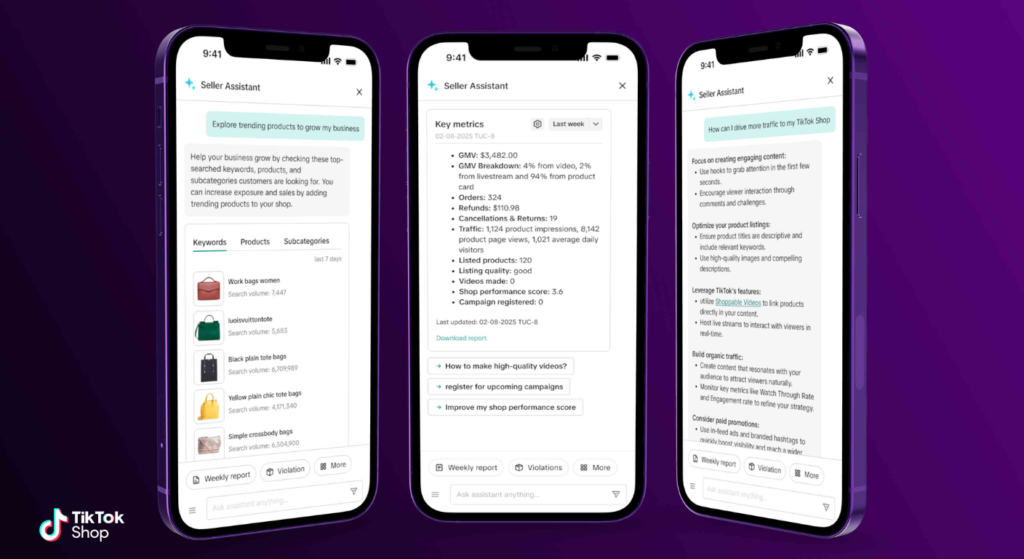
You’ve made sales. You know the algorithm exists. You’ve watched the views roll in on a random Tuesday video and then nothing in the shop. No conversion. No pattern you can replicate.
That gap between content that performs and content that sells is exactly what 2026 is going to separate.
Your 2026 Content Success Guide is a system for TikTok Shop sellers who already understand the basics and are ready to stop posting randomly and start building a content engine that compounds. This isn’t about going viral. It’s about building repeatable, conversion-linked content that works week after week and scaling it through affiliate creators when you’re ready.
A TikTok Shop content success guide is a structured framework sellers use to plan, produce, and optimize shoppable video content organized by format, cadence, and conversion goal so that every post serves a measurable purpose in the sales cycle.
Why Most TikTok Shop Content Plans Fall Apart Before February
Here’s the thing: the problem isn’t that sellers don’t post enough. It’s that they post without architecture.
According to TikTok for Business (2024), shoppable videos that include a clear product demonstration and a verbal call-to-action convert at 2x the rate of standard organic posts. That’s not a small margin. That’s the difference between content that entertains and content that pays rent.
Most sellers know they should show the product. What they don’t know is that the sequence problem introduction, product reveal, outcome demonstration, verbal CTA is the actual conversion mechanism. The video isn’t the product. The sequence is.
The three patterns that kill early-stage content plans:
- Copying trending audio without connecting it to a shop-specific CTA
- Posting product demos without a defined weekly cadence tied to sales cycles
- Treating every video as a standalone piece instead of part of a content architecture
Sellers who’ve tried generic TikTok growth advice YouTube tutorials, broad social media marketing courses often report the same frustration: the advice works for follower growth, not shop revenue. Those are different games.
The 4 Content Formats That Will Drive TikTok Shop Sales in 2026
Not all video formats are equal for Shop sellers. Here’s what the data and platform behavior actually support heading into 2026.
Format performance is the highest-leverage variable you control. Most sellers spend energy on aesthetics when they should be spending it on format selection.
Format 1: The Problem-Solution Demo (Your Workhorse)
This is the format that converts. Sixty to ninety seconds. Open with a problem your customer recognizes in the first three seconds. Introduce the product as the solution. Show the outcome. Say the CTA out loud.
Link in bio is dead. Tap the product below is the move.
Format 2: The Credibility Stack (For Mid-Funnel Buyers)
Before-and-after. User-generated content reposts. Side-by-side comparisons. These formats work for buyers who’ve seen your product once and need a reason to trust it. They’re not browsing they’re deciding.
This is where TikTok Shop Affiliate Program content lives. When a creator posts an honest review using your affiliate link, that’s a credibility stack you didn’t have to produce yourself. In 2026, this becomes a core content source, not a nice-to-have.
Format 3: The Trend Hijack With a Hook Anchor
Trending audio still works but only when the first line of your on-screen text anchors the viewer to a shop-relevant problem. The trend drives reach. The hook anchor drives retention. Retention drives the algorithm to show it to buyers.
Quick note: if you’re using trending audio without a hook anchor in the first two seconds, you’re borrowing the trend’s reach for zero conversion benefit.
Format 4: The Live Shop Session (Underused, High-Intent)
TikTok LIVE with Shop integration remains one of the most underused formats by small sellers. Viewers who join a live session and see a product demonstrated in real time convert at significantly higher rates than passive feed viewers. The intent is already there. You’re just closing it.
Or maybe I should say it this way: a live session isn’t a performance, it’s a sales conversation that scales.
Quick Comparison
| Format | Best For | Key Benefit | Limitation |
| Problem-Solution Demo | Cold audience, top of funnel | Highest direct conversion rate | Requires tight scripting |
| Credibility Stack | Warm audience, mid-funnel | Builds trust without hard sell | Slower to produce at scale |
| Trend Hijack + Hook Anchor | Reach expansion | Algorithm amplification | Low conversion if hook is weak |
| Live Shop Session | High-intent buyers | Real-time conversion, Q&A | Requires scheduling consistency |
How to Build a Weekly Content Cadence Tied to Your Sales Cycle
This is what the TikTok Seller University article doesn’t cover. And it’s the difference between a content plan and a content strategy.
A sales cycle for TikTok Shop typically runs in two rhythms: weekly spikes (tied to platform push events, paydays, and trending moments) and monthly arcs (tied to product launches, restocks, and seasonal demand). Your content calendar needs to serve both.
To build a weekly content cadence for TikTok Shop, follow these steps:
- Define your three content roles one conversion post, one trust post, one reach post per week minimum
- Map posts to your sales cycle schedule conversion posts on Wednesday–Friday when purchase intent peaks on the platform
- Use Kalodata to audit competitors identify which post types in your category are generating the most Shop revenue in the last 30 days
- Batch-produce using CapCut templates TikTok Shop-integrated CapCut templates reduce production time and maintain visual consistency
- Review weekly check which posts drove Shop clicks, not just views, and double down on that format the following week
The weekly review is non-negotiable. Views without shop click data are vanity. Shop click data without conversion rate context is incomplete. Kalodata gives you both it shows you which content formats in your category are driving actual GMV, not just engagement.
Some experts argue that posting frequency matters more than format quality. That’s valid if your goal is follower growth. But if you’re running a TikTok Shop, one well-structured conversion video outperforms five unstructured daily posts in revenue terms consistently.
Affiliate Creator Seeding: The 2026 Content Amplification Strategy Most Sellers Ignore
Here’s the most underused tactic heading into 2026: you don’t have to produce all your content yourself.
The TikTok Shop Affiliate Program lets you give creators a commission on every sale they drive through their content. That’s not an influencer deal. That’s performance-based content distribution. And for sellers who’ve hit a ceiling on their own organic reach, it’s the next lever.
Affiliate creator seeding works like this: you identify micro-creators in your niche (10K–200K followers, high engagement rate), send them your product, and they create content using their own affiliate link. You pay only when they convert. The content they produce becomes part of your credibility stack format 2 from the section above.
I’ve seen conflicting data on the ideal creator size for affiliate seeding. Some sources point to 100K+ as the threshold for meaningful volume, others show 10K–50K creators driving higher conversion rates due to tighter audience trust. My read is that for most small Shop sellers, starting with 5–10 micro-creators in the 10K–50K range delivers better ROI than chasing one large creator with a diluted audience.
What most guides skip is the seeding sequence. Don’t blast 50 creators at once. Seed 5, review their content quality and conversion data over two weeks, then expand to creators who match the top performer’s profile. Quality of fit matters more than volume of outreach.
Look, if you’re a TikTok Shop seller doing $5K–$30K monthly GMV, affiliate creator seeding is the single fastest way to multiply your content output without multiplying your production hours. That’s not hype. That’s the math.
Using CapCut and Kalodata to Execute Your 2026 Content Plan
Strategy without tools is just intention. Here’s how to operationalize everything above.
CapCut is TikTok-owned, which matters. Its Shop-integrated templates are built to match TikTok’s current content preferences the transitions, text placement, and pacing are already optimized for the feed. If you’re editing in a third-party tool and then uploading, you’re adding friction that CapCut eliminates. It’s not that other tools are bad. It’s that CapCut is native.
Kalodata is the analytics layer serious sellers use to stop guessing. It shows you: which products in your category are trending, which content formats are driving the most TikTok Shop GMV, and which creators are generating the highest affiliate revenue in your niche. That last data point is how you build your affiliate outreach list. You’re not cold-guessing who to contact, you’re identifying creators already proven to convert in your space.
Most people assume that more posting data automatically leads to better decisions. The data says otherwise without a tool like Kalodata filtering for Shop-specific conversion signals (not just engagement), more data creates more noise, not more clarity.
FAQs
Q: What’s the best content format for TikTok Shop sellers in 2026?
A: The problem-solution demo 60–90 seconds, opening with a recognizable customer problem, showing the product as the solution, and ending with a verbal CTA consistently drives the highest conversion rate for Shop sellers.
Q: How do I build a TikTok content calendar for my shop?
A: Plan three post types per week: one conversion post, one trust-building post, one reach post. Schedule conversion posts Wednesday through Friday when purchase intent peaks, and review Shop click data weekly to adjust.
Q: Should I use the TikTok Shop Affiliate Program as a small seller?
A: Yes, start with 5–10 micro-creators in the 10K–50K follower range in your niche. Pay commission only on sales they drive, review their content performance over two weeks, then scale to creators who match your top performer’s profile.
Q: Why does my TikTok content get views but no shop sales?
A: Most view-without-conversion problems come from missing a verbal CTA, weak hook anchors that attract the wrong audience, or content that entertains without demonstrating a product outcome. Fix the scripting sequence first.
Q: When should I start using Kalodata for my TikTok Shop?
A: Once you have a product catalog live and have posted at least 10–15 videos. Kalodata’s value is in competitor and category benchmarking — you need your own baseline data to make its comparisons actionable.
Conclusion
The sellers who win on TikTok Shop in 2026 won’t be the ones who post the most. They’ll be the ones who post with architecture format chosen deliberately, cadence tied to sales cycles, affiliate creators seeding credibility content in parallel, and analytics tools cutting the guesswork.
Stop optimizing for views. Start optimizing for the sequence from view to shop click to conversion.
That’s the whole system. Build it once. Refine it weekly. Scale it through creators when you’re ready.