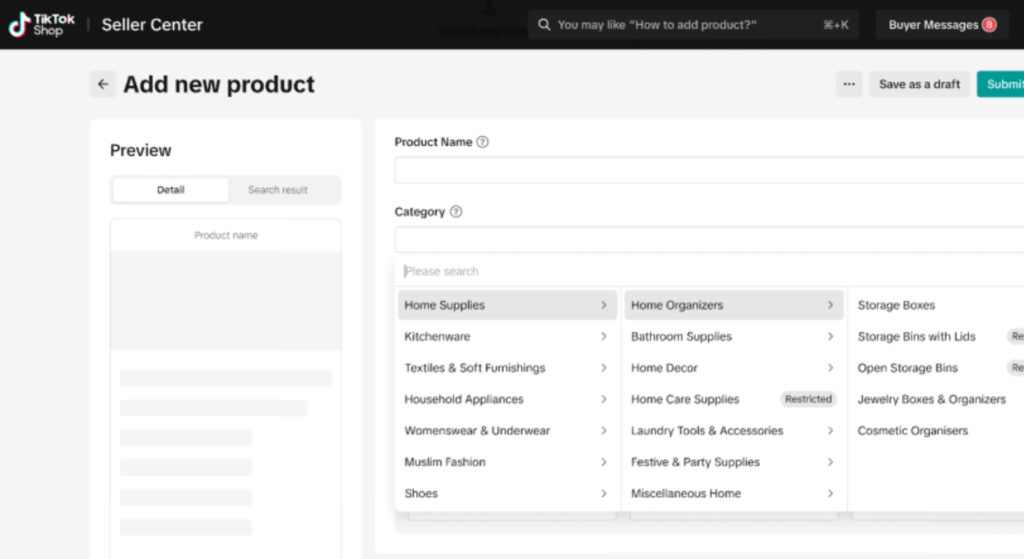
This guide covers title optimization for TikTok Shop listings in the US market. It does not address TikTok Shop advertising (Spark Ads, Shop Ads) or off-platform SEO for your product pages.
Your product has been live for two weeks. Zero sales. Maybe a handful of impressions. You’ve checked the price, looked at competitors, maybe even tweaked the photos but the title is still the same block of text you copied from your supplier’s Alibaba page.
That’s the problem.
TikTok Shop’s search algorithm reads your title first. It uses that text to decide which buyer searches your listing matches, how often to surface it, and whether it’s relevant enough to push into the Shop tab. A title written for a supplier catalog is not written for a buyer’s search bar and TikTok knows the difference.
Here’s what this guide covers: the correct title structure, how to find the right keywords using TikTok-native tools, category-specific rules that most sellers ignore, and real before-and-after rewrites you can model today.
Optimizing product titles on TikTok Shop means structuring your listing title to match the exact search terms TikTok buyers use, while staying within the platform’s 255-character limit. A well-optimized title places the highest-intent keyword within the first 60 characters and follows a category-appropriate format that TikTok’s algorithm can parse and rank.
Why TikTok Shop Titles Work Differently Than Amazon or Google
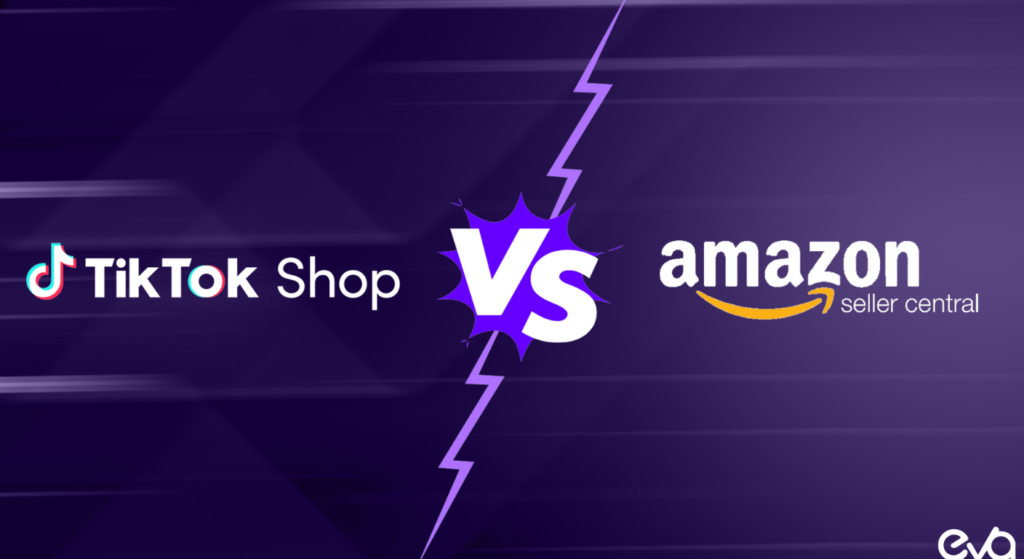
Most sellers assume keyword logic is portable. If it worked on Amazon, it’ll work on TikTok. That assumption is costing them impressions.
TikTok’s search behavior is driven by short, intent-dense queries, often 2–4 words typed directly into the Shop tab search bar or the main TikTok search field. Buyers aren’t writing long descriptive queries. They’re typing jade roller pink, oversized linen shirts, or bluetooth sleep headbands. The phrasing is casual, fast, and often category-shorthand rather than full product descriptions.
Amazon buyers, by contrast, tend to type longer queries and scan structured titles with multiple attributes. Google searchers are frequently still in research mode. TikTok Shop buyers are closer to the point of purchase. They’ve already been warmed up by video content and they’re searching to buy, not to browse.
According to TikTok Shop University’s 2023 seller education data, keyword relevance in the title field is directly linked to discoverability, with optimized titles generating up to 50% more impressions than non-optimized versions. That gap is enormous for a new listing with no sales history to boost its ranking.
The other thing most guides skip entirely: TikTok’s algorithm doesn’t just match keywords. It also weighs click-through rate and conversion signals against your title. If your title gets impressions but buyers don’t click, the algorithm interprets that as a relevance mismatch and pulls back the distribution. Your title has to earn the click, not just earn the impression.
Or maybe I should say it this way: a title is doing two jobs at once: satisfying the algorithm and persuading the human. Most sellers only think about one.
How to Research the Right Keywords for Your TikTok Shop Title
Skip the guesswork. Sellers who build their titles from gut instinct about what sounds right are consistently outranked by sellers who pull actual search data from TikTok-native sources.
Start inside TikTok itself.
Open TikTok’s search bar and type the root term for your product, something generic like hair oil or phone stand. Watch the autocomplete suggestions that populate. These are real queries TikTok users are typing, ranked by frequency. Screenshot the top 6–8 suggestions. Those are your raw keyword candidates.
Then go deeper with Kalodata.
Kalodata is a TikTok Shop analytics tool that shows you which keywords appear in the titles of top-selling competitor listings in your category. You can filter by sales volume, price range, and region. If five of the top ten sellers in your category all have vitamin C in the first 40 characters of their skincare titles, that’s not coincidence that’s a signal.
Shoplus adds trending search data.
Shoplus surfaces search terms that are gaining volume on TikTok specifically not Google, not Amazon. It’s useful for catching emerging search phrases before your competitors do. A term that’s trending upward today might be a core title keyword by next month.
Quick note: I’ve seen conflicting data on whether TikTok’s algorithm weights the first 30 characters or the first 60. Some Seller Center documentation implies the first 30 are most critical; Kalodata’s analysis of top-ranking listings suggests the window is wider, closer to 60. My read is: treat the first 60 characters as prime real estate and put your highest-volume buyer-intent keyword there, full stop.
To optimize a TikTok Shop product title, follow these steps:
- Search your root product term in TikTok’s search bar and capture the top autocomplete suggestions.
- Use Kalodata to identify which keywords appear in top-selling competitor titles in your category.
- Place your highest-volume buyer-intent keyword in the first 60 characters of your title.
- Add one secondary attribute (color, size, material, or use case) after the primary keyword.
- Stay within 255 characters and remove any symbols, ALL CAPS words, or promotional claims like best or #1.
The Title Structure That Works (With Category-Specific Rules)
There’s a base formula. Then there are category adjustments. Use both.
The base formula:
[Primary Keyword] + [Key Attribute] + [Secondary Keyword or Use Case] + [Optional: Size/Quantity/Variant]
Example for a generic product:
- ❌ Before: Jade Facial Roller Massager Beauty Tool Face Skin Care Anti-Aging Gua Sha Set Pink Green
- ✅ After: Jade Roller for Face – Rose Quartz Facial Massager for Puffiness and Glow, Includes Gua Sha
The after version leads with the exact search phrase buyers type, adds a specific attribute (rose quartz, a popular variant buyers filter by), includes a use-case keyword (puffiness, glow), and ends with a related secondary item that captures bundle searchers.
Category-specific rules:
Beauty & Skincare: Lead with the ingredient or treatment type Retinol Serum, Hyaluronic Toner. Buyers in this category search by ingredient first, brand second. Don’t bury the active ingredient in the middle of the title.
Fashion & Apparel: Lead with the silhouette or style descriptor buyers actually search Oversized Linen Shirt, Y2K Mini Skirt. Size is not a title element it’s a variant attribute in Seller Center. Putting sizes in the title wastes character space and reads as spam.
Electronics & Accessories: Lead with device compatibility or function iPhone 15 Case, Wireless Earbuds Noise Cancelling. Tech buyers search by compatibility first. A case that fits iPhone 15 Pro Max will be invisible to that buyer if the title just says phone case.
Home & Kitchen: Lead with the problem or outcome Grease Splatter Guard, Herb Drying Rack. Home buyers search by what they’re trying to solve, not by product category names.
Look, if you’re selling in the beauty space and your title starts with your brand name, here’s what actually works: move the brand name to the end, or remove it entirely from the title if you’re not yet a recognized name on TikTok. TikTok buyers don’t search brand names they don’t already know. They search for outcomes and ingredients.
What TikTok’s Algorithm Flags as a Bad Title
The TikTok Shop Seller Center has explicit content policies for titles, but they don’t tell the full story. Here’s what actually gets listings penalized or suppressed:
Keyword stuffing. Titles that repeat the same keyword three times jade roller jade face roller jade gua sha trigger TikTok’s spam filters. Each keyword should appear once. If you’re trying to capture two related search terms, use both once in a natural phrase structure.
Promotional language. Words like best, cheapest, sale, #1, and free shipping in the title violate Seller Center policies and can result in listing suppression. These belong in your description or promotional tags, not the title.
Special characters and symbols. Asterisks, pipes, slashes, exclamation marks. TikTok’s system doesn’t parse these as meaningful content they read as noise and in some cases can trigger a listing review.
Irrelevant keywords. Stuffing competitor brand names or unrelated trending terms into your title to intercept searches is a violation. TikTok’s category-matching system is more sophisticated than sellers expect when mismatched keywords get caught.
What most guides skip: title-category mismatch is a silent killer. If your title contains keywords that don’t match the category you’ve listed under, TikTok’s algorithm deprioritizes your listing because the signals conflict. A yoga mat listed under Sports Equipment with a title full of fitness gift language will rank below a competitor whose title language directly mirrors the category’s top search terms.
Quick Comparison: TikTok Shop Title Optimization vs. Amazon Title Optimization
| Factor | TikTok Shop | Amazon |
| Ideal title length | 60–120 chars (sweet spot) | 150–200 chars typical |
| Keyword query style | Short, casual, 2–4 words | Longer, attribute-rich |
| Brand name placement | End or omit if unknown | Beginning (brand-registered sellers) |
| Buyer search intent | Ready to purchase, trend-driven | Research + purchase mixed |
| Algorithm signals | CTR + conversion + keyword match | Keyword + sales velocity + reviews |
TikTok Shop titles work best when they’re shorter and more intent-specific than Amazon titles because TikTok buyers are already warmed up by video content and searching to confirm a purchase, not to begin research. The key difference is: Amazon rewards completeness; TikTok rewards precision.
Before and After Title Rewrites Sellers Can Model
Real examples. Real categories. No hypotheticals.
Example 1 Beauty:
- ❌ Face Wash Cleanser Daily Moisturizing Gentle Formula Skin Care Product Women Men All Skin Types
- ✅ Gentle Face Wash for Sensitive Skin Hydrating Daily Cleanser, Fragrance Free, 6 fl oz
Example 2 Fashion:
- ❌ Women’s Shirt Casual Top Blouse Fashion Summer Comfortable Loose Fit Multiple Colors Available
- ✅ Oversized Linen Button-Down Shirt Women Relaxed Fit Summer Top, Beige/White/Sage
Example 3 Electronics:
- ❌ Wireless Headphones Bluetooth Audio Device Music Listening Sports Gym Running Waterproof
- ✅ Wireless Sport Earbuds IPX7 Waterproof Bluetooth 5.3, 32Hr Battery, for Running and Gym
Example 4 Home:
- ❌ Kitchen Tool Cooking Accessory Splatter Guard Pot Cover Lid Large Size Stainless Steel
- ✅ Splatter Guard for Frying Pan – 13 Inch Stainless Steel Grease Screen, Dishwasher Safe
Notice the pattern. Every after title: leads with the buyer’s search phrase, includes one specific attribute that filters the right buyer, and ends with either a use-case signal or a product spec. None of them exceed 100 characters. None of them repeat a keyword.
Some experts argue that longer titles with more keyword density perform better because they capture more search variations. That’s valid if you’re operating on a platform with a longer query environment like eBay. On TikTok Shop, where the median search query is under four words, a 200-character title with fifteen keywords is just noise the algorithm has to wade through before finding your signal.
How to Test and Iterate Your Titles After Publishing
Optimizing product titles isn’t a one-time task.
After publishing, give a new title at least 7–10 days before drawing conclusions TikTok’s algorithm needs indexing time and initial impression data before it stabilizes ranking signals. Check your listing’s impressions and click-through rate inside TikTok Shop Seller Center under the analytics dashboard.
If impressions are low (relative to comparable products in your category), the keyword match is probably weak, revisit your primary keyword and check what Kalodata shows for top competitors in that exact subcategory. If impressions are reasonable but CTR is low, the title is getting found but not compelling clicks test a different key attribute in the first 60 characters, or swap a generic term for a more specific one that signals the buyer’s exact need.
Run one change at a time. Sellers who rewrite the entire title and change the images simultaneously can’t isolate what moved the needle.
FAQs
Q: What’s the best title length for TikTok Shop product listings?
A: The optimal range is 60–120 characters. Place your primary keyword in the first 60 characters. Titles under 40 characters often lack enough keyword signals; titles over 150 characters can read as spam to TikTok’s algorithm.
Q: How do I find keywords buyers actually search on TikTok Shop?
A: Use TikTok’s own search autocomplete to capture real buyer queries, then cross-reference with Kalodata or Shoplus for volume and competitor data. Avoid using Amazon or Google keyword tools as your primary source TikTok search behavior is different.
Q: Should I put my brand name in my TikTok Shop product title?
A: Only if your brand is already recognized on TikTok. Unknown brands in the title waste prime keyword real estate. Place brand names at the end of the title or in the product description instead.
Q: Why does my TikTok Shop listing have impressions but no sales?
A: Impressions without sales usually indicate a mismatch between the keyword attracting clicks and what buyers see when they land on the listing. Revisit whether your title keyword accurately reflects the product and check that your price, images, and reviews are competitive.
Q: When should I update a product title on TikTok Shop?
A: Update titles when impressions drop below your category baseline for 7+ consecutive days, when a new trending keyword emerges in your niche (track via Shoplus), or when a competitor with a similar product consistently outranks you in the Shop tab.
This guide covers TikTok Shop title optimization for the US market using the current Seller Center interface as of mid-2025. Title character limits and algorithm behavior are subject to change as TikTok continues updating its platform check TikTok Shop University for the latest policy updates.