If you’ve ever tried to list a product and hit a wall that says your category requires qualification, you already know TikTok’s Seller Center doesn’t exactly hold your hand through what comes next.
This guide does.
What Category Qualification on TikTok Shop Actually Means
Category qualification on TikTok Shop is the process by which sellers must demonstrate eligibility through documentation, account metrics, or brand authorization before they can list products in categories TikTok has designated as restricted or sensitive. It is not a one-time setup step. Some categories require requalification if your account standing changes.
Think of it less like a form and more like a compliance audit. TikTok is protecting consumers and its platform reputation simultaneously, which means the bar isn’t arbitrary but it is specific.
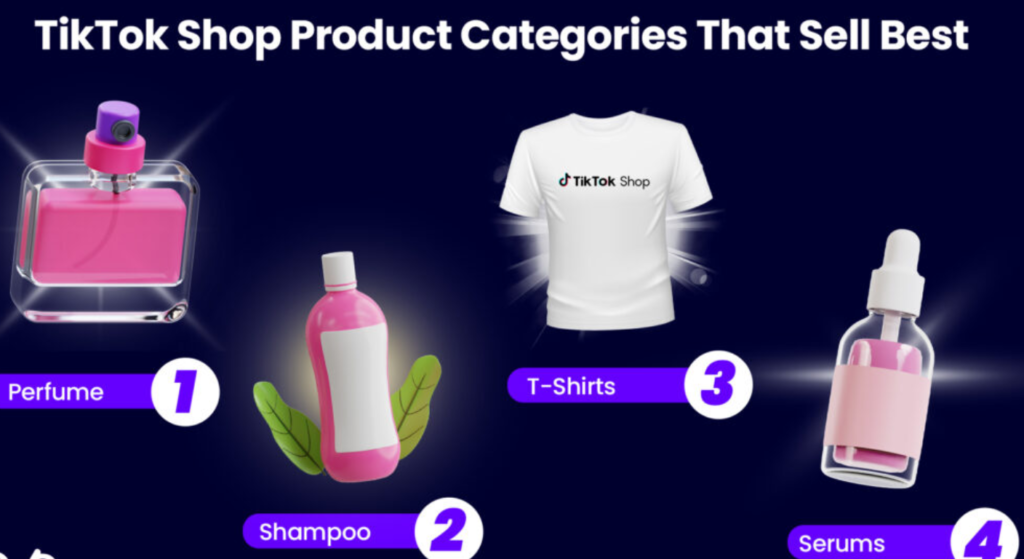
According to eMarketer’s 2025 Social Commerce Forecast, TikTok Shop surpassed 500,000 active sellers in the US as of Q1 2025, with beauty, health, and electronics being the fastest-growing categories. They’re also the most heavily gated. That’s not a coincidence.
Which Categories Require Qualification and Why
Not every product category on TikTok Shop is open to all sellers. TikTok maintains a tiered access model where some categories are open by default, some require basic documentation, and others require a full compliance review.
Open categories (no extra steps): General merchandise, home goods, clothing and accessories, most toys, and pet supplies for healthy adult animals.
Qualification-required categories include:
- Beauty and personal care especially products with active ingredients, SPF claims, or anything applied to the skin, hair, or nails
- Health and wellness supplements requires FDA registration numbers, third-party lab testing certificates, and in some cases, a Certificates of Analysis (COA)
- Electronics and high-value goods FCC compliance documentation often required for wireless or powered devices
- Food and beverage FDA food facility registration, ingredient labeling proof, and in some cases allergen disclosure documentation
- Branded goods requires brand authorization letters or proof of being an authorized reseller if you’re not the brand owner
- Firearms accessories and related items heavily restricted; many sub-categories are entirely unavailable to third-party sellers regardless of documentation
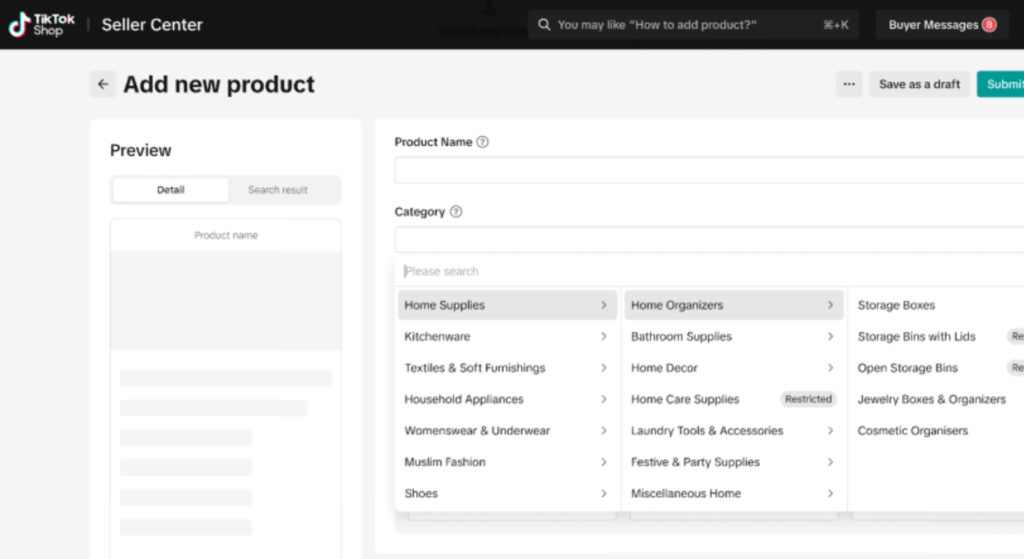
Here’s the thing: TikTok doesn’t publish a clean master list of which categories require what. The requirements surface inside the Seller Center when you attempt to list. That reactive disclosure is one of the biggest frustrations sellers report and one of the biggest gaps in TikTok’s own University documentation.
The Exact Documents You’ll Need by Category Type
This is what TikTok’s University article skips. Let’s fix that.
The documentation requirements vary by category, but here’s a practical breakdown of what sellers are actually submitting successfully in 2026:
Health, Wellness, and Supplements
- FDA facility registration number (searchable via the FDA’s online database this is a real, verifiable number, not a self-declaration)
- Third-party Certificate of Analysis (COA) from an accredited lab ISO/IEC 17025 accreditation is the standard TikTok reviewers look for
- Ingredient list and label proofs matching exactly what’s in the listing
- Manufacturing facility documentation if you’re a private label seller
Quick note: If your supplement makes any disease claim even a vague one you’re in a different regulatory lane entirely. TikTok’s compliance team will flag it, and the FDA will too.
Beauty and Personal Care
- Safety assessment or toxicology report for products with active ingredients above threshold concentrations
- Cruelty-free or organic certifications if claimed in listing copy (claims without proof get flagged)
- Brand authorization letter if selling another brand’s products written on that brand’s letterhead, signed, and dated within 90 days of submission
Electronics
- FCC ID documentation for any device that transmits wirelessly (Bluetooth, Wi-Fi, RF)
- CE or UL certification depending on product type
- Country of origin documentation
Branded Goods (Any Category)
- If you’re an authorized reseller: a signed letter from the brand, your reseller agreement, and proof of purchase from an authorized distributor
- If you ARE the brand: trademark registration certificate (USPTO for US sellers) or equivalent
Or maybe I should say it this way, the single most common rejection reason isn’t missing documents. It’s submitting documents that don’t match the listing. Your COA must reference the exact product SKU you’re listing. Your brand letter must name your seller account. Generic documents get rejected. Every time.
How to Submit a Category Qualification Application: Step by Step
To apply for category qualification on TikTok Shop, follow these steps:
- Log into TikTok Seller Center at seller.tiktok.com using your registered seller credentials.
- Navigate to My Account → Qualification Management in the left sidebar.
- Select the category you want to qualify for from the dropdown list.
- Upload required documents in the formats specified PDF for legal documents, high-resolution JPEG or PNG for certificates and labels.
- Submit the application and note your submission timestamp TikTok’s stated review window is 3–7 business days, though sellers in health and beauty categories frequently report 10–14 days in practice.
- Monitor the status inside Qualification Management you’ll see Pending, Approved, or Rejected with a reason code.
Most sellers manage their document submissions using a tool like Passport, which lets you organize compliance files by category and track expiration dates useful because some certifications (like COAs) need annual renewal and TikTok will deactivate your listing if a qualifying document lapses.
Before applying, many sellers use Jungle Scout to verify there’s enough demand in their target category to justify the qualification effort, especially relevant if you’re entering a niche like health supplements where the documentation process can take weeks.
What Happens If Your Application Is Rejected
This is the section TikTok’s University article doesn’t have. At all.
Rejection doesn’t mean permanent disqualification. It means your current submission didn’t meet the criteria and TikTok will give you a reason code, even if it’s frustratingly brief.
Common rejection reasons and what they actually mean:
| Reason Code | What It Means | What to Fix |
| Document mismatch | Your uploaded file doesn’t match the listing details | Ensure product name, SKU, and seller name align exactly across all documents |
| Expired certification | A key document is past its validity date | Obtain a renewed certificate and resubmit the full package |
| Insufficient authorization | Brand letter is missing required fields | Get a new letter: brand name, your seller ID, category, valid date, brand signature |
| Unverified manufacturer | Supplier documentation can’t be cross-referenced | Request a manufacturer’s license or facility registration from your supplier |
| Incomplete submission | Missing one or more required document types | Review the checklist inside Qualification Management before resubmitting |
The appeals process: If you believe a rejection was made in error, you can submit an appeal through TikTok Seller Center’s support ticket system specifically under Account & Qualification Issues. Include your original submission timestamp, the rejection reason code, and a clear explanation of why the rejection was incorrect. Attach all original documents plus any additional supporting materials.
Realistic timeline for appeals: 5–10 business days. TikTok does not offer an expedited review lane for most sellers.
Resubmission best practices:
- Don’t resubmit identical documents. If they were rejected once, they’ll be rejected again.
- Address every flagged issue in the rejection notice, not just the most obvious one.
- Add a brief cover note in the additional information field explaining what you changed and why.
Some experts argue that reaching out to a TikTok Shop account manager speeds up the appeals process. That’s valid if you have a dedicated manager typically available to sellers generating over $10,000 monthly GMV. If you don’t have that relationship, the support ticket route is your only option.
Quick Comparison:
| Seller Type | Best Approach | Key Benefit | Limitation |
| Brand owner | Submit trademark + product docs directly | Fastest approval path; no third-party authorization needed | Trademark must be registered, not just pending |
| Authorized reseller | Brand authorization letter + distributor invoice | Opens branded category access without owning IP | Letter must be renewed; brand can revoke at any time |
| Private label seller | Factory certs + COA + own brand docs | Full control over documentation timeline | Must establish own brand presence; no brand equity borrowed |
| White-label reseller | Requires supplier’s compliance docs assigned to you | Lower upfront cost for compliance | Supplier documentation quality is variable and hard to control |
White-label sellers have the hardest qualification path. Not because TikTok targets them specifically, but because the compliance chain is longer and every link in that chain needs to be checked out.
The Counter-Intuitive Part Most Sellers Get Wrong
Most sellers assume the qualification process is about proving product quality. The data says otherwise.
TikTok’s qualification framework is primarily about liability documentation proving that if something goes wrong with a product, there’s a traceable compliance record showing TikTok acted in good faith by verifying the seller’s credentials. That distinction matters for how you approach your submission.
Don’t write a pitch for your product’s quality. Submit a compliance record that’s clean, traceable, and internally consistent. Reviewers aren’t evaluating whether your supplement works. They’re checking whether your COA was issued by an accredited lab and whether it references the specific formula you listed.
What most guides skip is this: your documents need to tell a consistent story. Every piece of paper should reference the same entity names, the same product identifiers, and the same legal business name you used when registering your seller account. Discrepancies even minor ones like LLC vs L.L.C can trigger a mismatch rejection.
I’ve seen conflicting data on rejection rates by category. Some community reports put health supplement rejections at 40%+ on first submission; TikTok hasn’t published official numbers. My read is that the actual rejection rate is high enough that planning for a resubmission from the start rather than hoping for first-pass approval is the smarter approach.
FAQs
Q: What’s the best way to find out if my TikTok Shop category needs qualification?
A: Log into TikTok Seller Center and attempt to create a listing in your target category. If qualification is required, the system will display a prompt under Qualification Management before the listing goes live.
Q: How do I submit documents for TikTok Shop category approval?
A: Go to Seller Center → My Account → Qualification Management. Select your category, upload required documents in PDF or high-res image format, then submit. Review takes 3–14 business days depending on category.
Q: Should I use a third-party tool to manage my TikTok Shop compliance documents?
A: Yes, tools like Passport help you track document expiration dates and organize files by category, which prevents listing deactivations when certifications lapse.
Q: Why does TikTok keep rejecting my category qualification application?
A: The most common cause is a document mismatching your uploaded files that doesn’t reference the exact product SKU, seller name, or entity name matching your listing and account. Review every document for internal consistency before resubmitting.
Q: When should I start the category qualification process on TikTok Shop?
A: Start at least 3–4 weeks before your planned listing date. Health and beauty categories in particular can take longer than TikTok’s stated review window, and resubmissions add additional time.